World Cup Transit, Regional Rail & Two Big Premieres
This week, we’re looking at transit systems built for flexibility, connectivity, and real-world rider behavior: from the reinvention of commuter rail into all-day regional mobility networks, to the massive operational challenge cities face ahead of the 2026 FIFA World Cup. Plus, two new premieres: Paul explores San Antonio alongside VIA Metropolitan Transit, and transportation journalist Dan Zukowski joins the show to break down how host cities are preparing for one of the biggest transit stress tests in modern history.
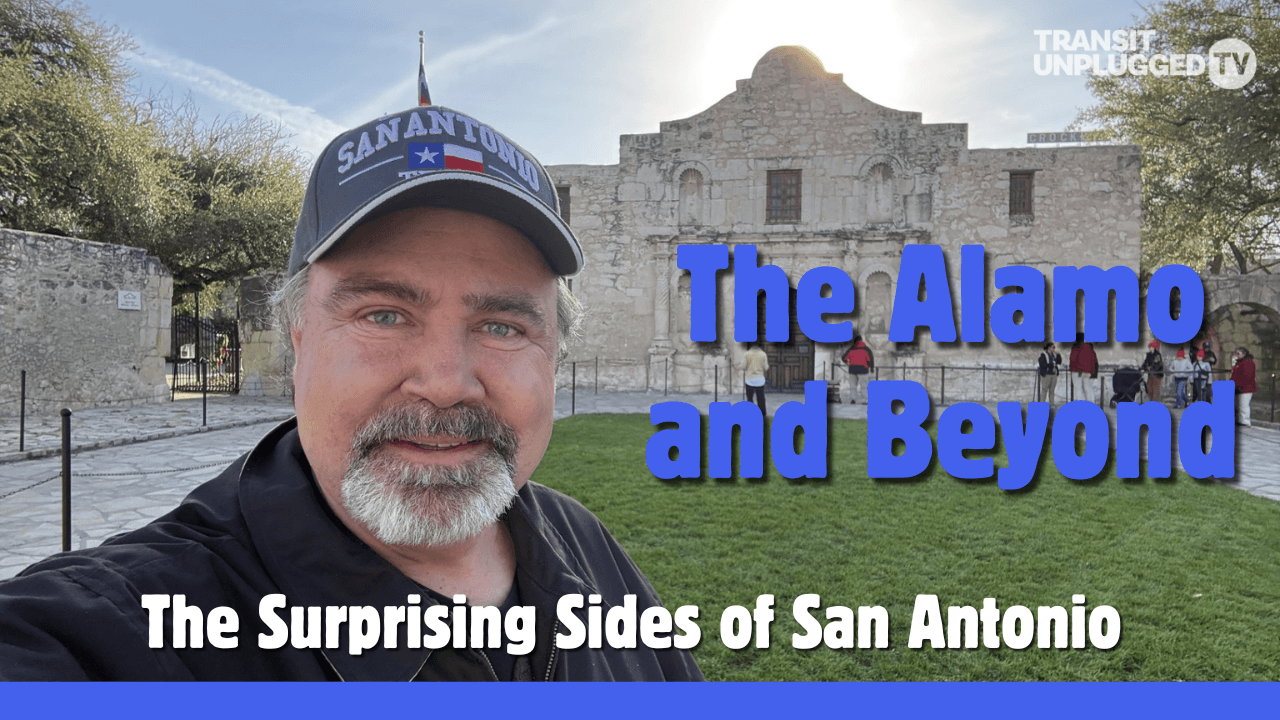
PREMIER: SAN ANTONIO
Paul explores San Antonio on VIA Metropolitan Transit, the largest bus-only system in the US, riding alongside CEO Jon Gary Herrera and his team. He also steps onto the Spurs’ court at the Frost Bank Center, visits Morgan’s Wonderland — the world’s only fully inclusive theme park — and wraps up with a private dinner cooked by students at the Culinary Institute of America. San Antonio is a lot of things. Boring isn’t one of them.
PREMIER: Dan Zukowski
Paul speaks with transportation journalist Dan Zukowski of Smart Cities Dive about the enormous mobility challenge behind one of the world’s biggest sporting events: The FIFA World Cup. From Los Angeles and Boston to New York-New Jersey and Atlanta, transit agencies are preparing to move hundreds of thousands of visitors safely, efficiently, and seamlessly through their cities.
ICYMI: Katie Choe
Commuter rail is being reinvented—and at Virginia Railway Express (VRE), that shift starts with one big idea: becoming a true regional rail system. Katie Choe, CEO of VRE, joins Paul to explain how the agency is moving beyond its traditional peak-hour, commuter-focused model toward a more flexible, all-day, bi-directional network designed for today’s travel patterns.