Supporting sustainable choices with transit
Last week in the newsletter we talked about how Mother Nature drives a lot of innovation in transit in Alaska, California, and Miami. We’re continuing on that theme with our episode from Miami and a spotlight on Sacramento’s vibrant farm-to-fork scene.
In Miami-Dade County, CEO Eulois Cleckley is working passionately on switching his bus fleet to battery electric. To do that, and create the longest battery-electric Bus Rapid Transit (BRT) route in the U.S., Miami-Dade Department of Public Works and Transportation needed to build another first—the largest battery electric bus garage in the U.S. When finished in just a couple of years, it will house one hundred 60-foot articulated battery electric buses and support the BRT line as well.
But this facility is going to be more than just a big block of buildings on 20 acres. It will include community spaces, have solar panels to generate some of its own power, and xeriscaping to reduce demand for water. Conscious choices Miami-Dade and their construction partner WSP made to make the building as green as possible.
Related to transit and sustainability is transporting food. Sacramento is right in the middle of some of the richest agricultural land in the country and a lot of those fruits and veggies often travel thousands of miles before they show up in stores (and your table).
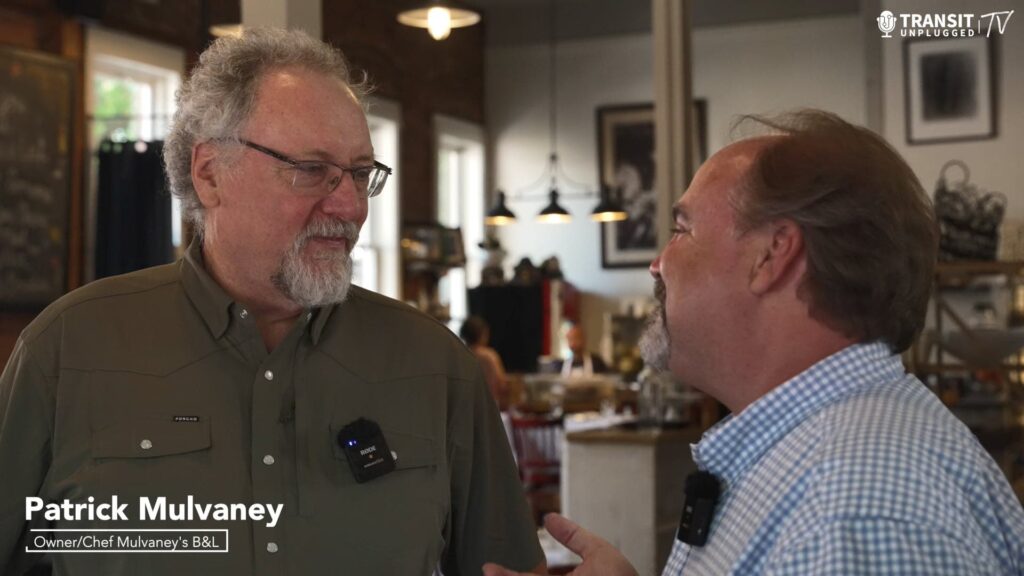
On the other side of that is the farm-to-fork movement that focuses on being in sync with what fruits and vegetables are in season in your area at any given moment. On his trip to Sacramento, Paul got to experience this all first hand at Mulvaney’s B&L restaurant from the man who has spearheaded it all: Patrick Mulvaney.
This week on the podcast: Miami continues to lead transit innovation
Usually building a new bus garage is a big deal for a transit agency, but maybe not outside the area.
Unless you’re Miami-Dade County.
This week we dive into the hows and whys of the new first-of-its-kind electric bus facility with Eulois Cleckley and Angel André Chavarria. The 400,000 square foot, 20 acre complex will house, charge, and maintain up to one hundred 60-foot articulated battery electric buses plus support their new (also a first for the U.S.) 20 mile BRT line that will use all battery electric buses.
If that wasn’t enough, as you’ll learn in the interview, Angel and his team at WSP had some very unique challenges that needed innovative solutions with this project. And you’ll have to listen to learn more.
Farm-to-fork takes center stage in Sacramento
For some members of the Transit Unplugged team (Paul and Tris in particular) being close to farms and farm-fresh food is normal, but for most people, eating corn that was picked just hours before is a novelty. But the farm-to-fork movement aims to change that.
Like the 100 mile diet—where you try to eat food grown within a 100 miles of you—the farm-to-fork movement aims to reconnect us with the natural seasonality of our food. At Mulvaney’s B&L they have really taken this to heart. Patrick Mulvaney is considered the grandfather of the farm-to-fork movement and his restaurant reflects that in a menu that changes daily to match what he can get fresh from local farmers.
Farm-to-fork is a big deal in Sacramento, they even have a whole festival for it! So if you’d like to see what amazing—and mouth watering—foods Paul got to try at Mulvaney’s just watch this episode of Transit Unplugged TV.
Coming up next week on Transit Unplugged: Vienna and Wiener Linien
It is no secret that Paul loves trains. On his recent trip to Europe he got to ride from Hamburg to Vienna on the OBB Nightjet train to attend the World Passenger Festival. Once in Vienna, Paul got a guided tour of the transit system and interview the CEO of Wiener Linien Alexandra Reinagl.
One of the most interesting things about Wiener Linien is their holistic approach to transit. They see themselves as “mobility designers” where they put together different ways to get around—including a car share service—to get as many people on transit as possible.
They are also in the midst of some massive construction projects, which causes disruptions for riders. But in Vienna, they approach construction and improvements to the system with some tongue-in-cheek signage that all of us could take a lesson from.